When the Sky Goes Sideways: A Field Guide to Outlasting Storms at Remote Camps
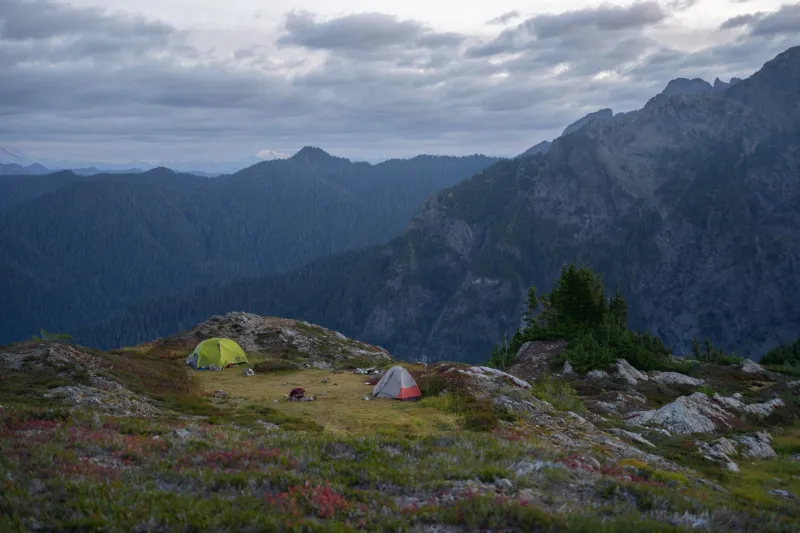
Every camper eventually meets the same moment. You're twelve miles from the trailhead, the phone shows one bar, and the sky over the western ridge has turned the color of a bruise. The forecast — the one you checked three times before leaving — said nothing about this.
That's the thing about remote camping in America: the forecast is a suggestion, not a promise. What separates a good story from a bad night isn't luck. It's having a plan that starts before the first drop falls.
Read the Sky, Not Just the App
Weather apps run on models, and models struggle in complex terrain. A canyon in Utah can have its own microclimate that no algorithm nails. So learn the analog signals.
Clouds tell you almost everything. Building cumulus towers by mid-afternoon in the Rockies or the High Sierra? That's your thunderstorm window — typically between 2 and 6 p.m. — and smart travelers plan to be off exposed ridgelines and summits well before then. Morning summits, afternoon valleys. It's the oldest rule in mountain country for a reason.
Wind matters too. A sudden shift, especially warm gusts ahead of a cold front in the Appalachians or the Plains, often arrives 30 to 60 minutes before the rain does. And that sour, metallic smell of ozone on a summer afternoon? Storm's closer than you think.
One more trick: check the forecast for the region, not just the point. If the whole grid is showing instability, plan your camp as if rain is coming, even at 20% odds. Twenty percent happens.
Build Camp Like It's Going to Rain — Because Someday It Will
The best storm-proofing happens on a dry afternoon, not a wet midnight. Pros pick campsites with three things in mind:
Elevation, but not exposure. You want to be above the low ground where cold air and water pool, but below ridgelines and lone trees that attract lightning. A bench or gentle slope partway up is the sweet spot.
Drainage awareness. Look uphill. That pretty grassy flat at the bottom of a slope is a creek the moment it rains hard. Never pitch in a drainage, a dry wash, or the low curve of a meadow. In canyon country, dry washes are the single most dangerous place to sleep — flash floods can arrive from a storm falling on country you can't even see, miles upstream.
Natural windbreaks. Boulders, dense tree lines, terrain steps. Face your tent door away from the prevailing weather, which in much of the US means away from the west and southwest.
Then rig your tarp before you need it. A simple A-frame between two trees, angled steeply enough to shed water, with the downhill edge lower than the uphill one, gives you a dry kitchen and a morale-saving hangout. Bring extra guyline and a handful of stakes beyond what your tent came with — rocks work as anchors in slickrock country, and deadman anchors (buried sticks or stuff sacks filled with dirt) hold in sand and snow.
Skip the drainage trench around your tent. That old Scout trick mostly tears up ground and, on slopes, can channel water straight into your floor. A good groundsheet, taut tent fly, and a smart site choice do more than a shovel ever will.
Know Your Region's Flavor of Ugly
Different parts of the country break bad in different ways, and your plan should match:
- Desert Southwest: Flash floods are the killer, not the rain itself. Storms miles away can send walls of water and debris down narrow canyons. If rain is falling anywhere in the drainage system, get to high ground and stay out of slot canyons entirely.
- Appalachians and Southeast: Soggy, slow-moving thunderstorms and drenching all-day rain. Hypothermia is a real risk even in summer when temps drop into the 50s and you're soaked. Dry layers in a waterproof bag are non-negotiable.
- Rockies and High Sierra: Violent, fast afternoon lightning. Below treeline by noon in summer, period. If you're caught out, avoid lone trees, spread your group out, and get off ridges and out of meadows.
- Plains and Midwest: Supercells and hail move fast — sometimes 50 mph. In truly open country, your best move may be lying flat in the lowest spot you can find, away from trees, with your pack over your head for hail protection.
- Pacific Northwest and Coastal ranges: Less lightning, more relentless soak. Here it's all about gear that keeps working wet: synthetic insulation, a tarp you can live under, and a site with real drainage.
Ride It Out or Break Camp?
Here's the honest decision framework. Break down and move when:
- You're in a drainage, wash, or flood-prone flat — no exceptions
- Lightning is active and you're above treeline or on exposed terrain
- Sustained winds are stressing your shelter beyond what it was built for
- The forecast (or the sky) says this is the leading edge of a multi-day system and you're deep in
Stay put when:
- Your site is high, dry, and sheltered
- It's a short, sharp cell — most thunderstorms pass in under an hour
- Moving means crossing exposed terrain during the worst of it
If you stay, stow anything that can become a projectile, crack your tent vents to reduce condensation, get into dry layers before you're cold, and put your head somewhere low and boring. Storms feel longest when you're watching them.
The Gear That Earns Its Weight
A storm-ready kit isn't big. It's a silnylon or Dyneema tarp, 30 feet of cord, a full rain shell (jacket and pants), a pack liner or dry bag for your sleep system and spare clothes, a headlamp with fresh batteries, and a weather radio or satellite messenger with forecasts — because once you're out of cell range, it's the only forecast you'll get.
One dry set of clothes reserved strictly for sleeping. That's the whole secret to staying warm and level-headed when everything else is soaked.
The Sky Is Part of the Trip
Nobody heads into the backcountry hoping for a washout. But there's a certain satisfaction in sitting under a taut tarp, cocoa in hand, rain hammering the fly, knowing your camp is built for exactly this. Storms end. Mud dries. And the story gets better every time you tell it.
The forecast will lie to you eventually. Your plan doesn't have to.