Ears On: A Field Guide to Decoding Every Bump, Hoot, and Rustle at Your Campsite After Dark

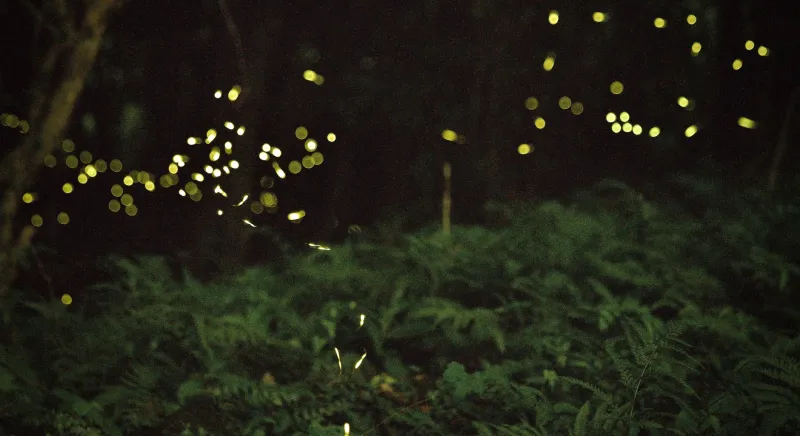
Photo by Photo by Rostyslav Savchyn on Unsplash on Unsplash
Every camper knows the moment. You're warm in your bag, the fire's long dead, and then — thump. Something out there. Your brain, still running software from a hundred thousand years ago, screams mountain lion. Your sleeping bag suddenly feels very thin.
Here's the truth that veteran campers learn after a few hundred nights out: the night is loud, it's chatty, and 95% of what you're hearing is either a bird with a big mouth or a raccoon with bad manners. The other 5%? Usually the tent itself.
We pulled together input from wildlife biologists, a former backcountry ranger in Colorado, and enough campers to fill a trailhead parking lot to build this guide. Learn these sounds and you'll sleep through almost anything — or better yet, stay awake and enjoy the show.
The Hooters and Howlers: Birds Doing Bird Business
The deep, resonant "hoo-hooo" echoing through the trees is almost certainly a great horned owl — one of the most common owls in North America and, honestly, the most dramatic. They're called "tiger owls" for a reason: they're apex predators the size of a basketball, and they have zero respect for your bedtime. Barred owls, common east of the Rockies, get weirder — their call sounds like someone asking "who cooks for you?" and sometimes they just laugh. An unhinged, cackling monkey-laugh from a Florida swamp or an Appalachian hollow is a barred owl having a conversation. It is not a witch.
The screech, though — the screech is what gets people. A blood-curdling scream from the woods is usually a barn owl or a fox. Red foxes in particular sound like a person being murdered, which is a genuinely terrible design choice for an animal that weighs twelve pounds. If you camp in the desert Southwest and hear something that sounds like a child crying, that's often a coyote. Eerie? Extremely. Dangerous? Not remotely. Coyotes want nothing to do with you.
The Rustlers: Small Pests, Big Attitudes
A soft, deliberate rustling — sniff, shuffle, pause, sniff — circling your camp is the signature of a raccoon, and if you've left so much as a granola wrapper out, you've basically sent them an invitation. Raccoons are the career criminals of the campsite: clever, persistent, and completely unafraid of you. A ranger we spoke to in the Adirondacks put it bluntly: "If a raccoon is in your cooler, you've already lost. The fight now is over your dignity."
The high-pitched chattering in the trees at dusk or before dawn? Squirrels and chipmunks scolding whatever wandered into their territory — often you. Mice inside your pack make a tiny, maddening scratching sound. That one deserves immediate attention, because mice will chew through a $200 sleeping bag like it's a snack.
And if you're camped in cattle country out West and hear slow, heavy crunching that stops whenever you move? That's a cow. Seriously. Ranchers graze cattle on public lands across much of the West, and a 1,500-pound animal with no predators and no schedule will absolutely wander through your camp at 2 a.m. It's terrifying for about four seconds and hilarious for the rest of your life.
The Big Stuff: What Actually Deserves Your Attention
Let's address the animals people actually fear. Bears are surprisingly quiet — the sound you're most likely to get is a low woofing or jaw-popping if one feels threatened, usually near a food source. The fix isn't listening skills; it's a bear canister or a proper hang, and storing food away from where you sleep. Do that, and nighttime bear encounters become vanishingly rare.
Mountain lions are even quieter. The genuinely unsettling sound — a scream like a woman calling for help — is real, but hearing it is a bucket-list-level rarity. In 30 years of running trips, our Colorado contact has heard it twice. "Both times, I just made noise and went back to sleep," she says. "They don't want anything to do with people."
Skunks make a soft shuffling too, but you'll usually smell the warning first. If you hear a hiss combined with that smell, do the opposite of investigating. Back off, slowly, and let them have the campsite. The skunk always wins.
The Sounds That Aren't Animals At All
Here's the category nobody warns new campers about: your own gear.
That slow creak-crack from your tent as the temperature drops? That's fabric and pole joints contracting. Nylon gets taut, zippers shrink, and cheap pole clips tick like a clock. A popping sound from your fire pit long after the flames are gone is just wood settling — and occasionally gas escaping from wet wood, which can sound like a small pop gun. Normal.
Wind changes everything at night. A breeze that barely registered at sunset can sound like a full-on gale at 2 a.m., and tree branches knock together in ways that sound suspiciously like footsteps. Lakes and rivers do their own thing too — water levels drop, ice shifts, and the shore creaks. If you're camped near water in cold months, distant booming or cracking is ice adjusting. It carries for miles and sounds enormous. It usually is enormous. It's also nowhere near you.
What To Actually Do at 3 A.M.
- Listen before you react. Ten seconds of stillness tells you more than ten minutes of flashlight sweeping.
- Identify the pattern. Rhythmic rustling near food = raccoon. Random scurrying = rodents. Long silences between sounds = something big and cautious, or nothing at all.
- Make noise only if it's warranted. For most animals, a firm "hey!" from inside the tent ends the visit. Save the aggressive stuff for an actual bear.
- Never leave the tent to check. Whatever it is, it will still be there — or gone — in the morning.
The best part of learning the night's vocabulary? The fear fades and something better replaces it. You start recognizing the barred owl that's been calling from the same oak all week. You learn your tent's creaks like a house's floorboards. And one night, deep in a national forest somewhere, you'll lie awake not because you're scared — but because you don't want to miss what's singing.
That's when you know you've made it. The dark isn't the enemy. It's the best show in camp.