Sleep on the Summit: 7 Legal Alpine Campouts for First-Timers
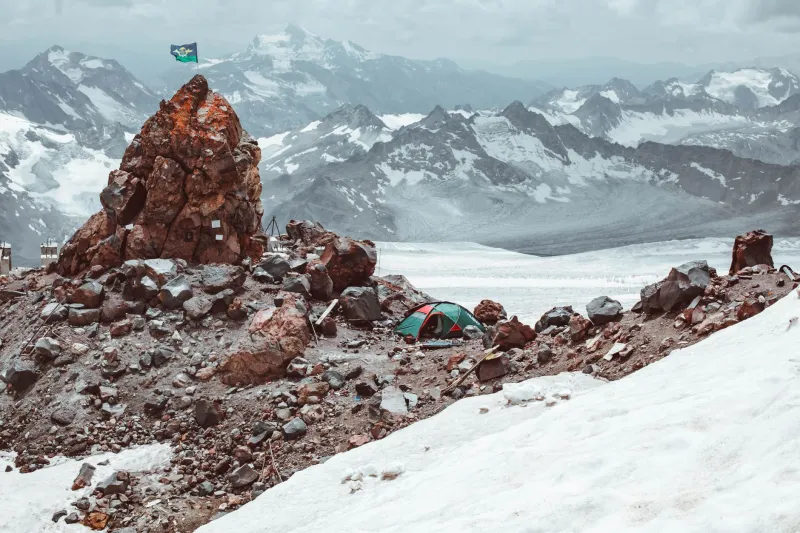
Watching sunset from a summit and having absolutely nowhere to descend to? That's the alpine camping dream — and it's more attainable than most folks think. You don't need a glacier kit or a resume of 14ers. What you need is the right peak, the right paperwork, and a realistic read on your legs.
Here are seven US summits where you can legally sleep high, ranked roughly by how gently they'll treat you.
1. Mount Marcy, Adirondacks, New York
New York's high point at 5,344 feet isn't technically a walkover, but the standard route from the Adirondak Loj is a well-traveled, roughly 15-mile round trip. Dispersed camping is legal in the High Peaks Wilderness below 3,500 feet and 150 feet from water — camp near Marcy Dam or along the approach, then tag the summit at sunrise with a light pack. No permit needed, but winter requires a DEC permit for groups. Best season: June through September.
Difficulty: Moderate. Long, not steep.
2. Mount Rogers, Virginia
The tallest point in Virginia (5,729 feet) hides in a high-elevation grassy bald that feels more like Montana than Appalachia. Wild ponies included. Dispersed camping is allowed in the Mount Rogers National Recreation Area with straightforward rules — no permit for individuals. Park at Grayson Highlands State Park and camp among the balsams.
Difficulty: Easy to moderate. The summit is a stroll from the AT.
3. Mount Wrightson, Arizona
At 9,453 feet, Wrightson rises out of the Sonoran Desert south of Tucson, and camping in the upper Madera Canyon campgrounds or dispersed zones puts you within striking distance. No permit required. The payoff: saguaros below, pines above, and a ridgeline sunrise that punches way above its difficulty class.
Difficulty: Moderate. Steady switchbacks, big elevation gain.
4. Black Elk Peak, South Dakota
Formerly Harney Peak, this 7,242-foot granite dome in the Black Hills is the highest point east of the Rockies in that stretch of the country. Camp at dispersed sites in the Black Hills National Forest surrounding Custer, then hike in from Sylvan Lake. No permit needed.
Difficulty: Easy. If you can hike 7 miles round trip, you can do this.
5. Mount Langley, Sierra Nevada, California
Your first California 14er, and the friendliest. At 14,042 feet, Langley's standard route via New Army Pass involves class 2 scrambling at most — the mildest of the Sierra 14ers. The catch is paperwork: Inyo National Forest wilderness permits are required, and reservations open at recreation.gov six months out, with a first-come lottery in spring. Cottonwood Lakes Basin offers legal lakeside camps on the approach.
Difficulty: Moderate to hard. Altitude is the real opponent — camp high, sleep in, acclimate.
6. Mount Adams, Washington
The South Spur route on Washington's second-highest peak (12,281 feet) is a non-technical snow climb that thousands of first-timers summit each year. The magic move: camp at the Lunch Counter at around 9,300 feet, sleep high, and summit at dawn on firm snow. A Climbing Pass (around $25) is required above 7,000 feet — self-issue at the trailhead. Season: late May through July for solid snow conditions.
Difficulty: Moderate to hard. Boots and an ice axe, no ropes needed on the South Spur.
7. Longs Peak, Colorado — The Stretch Goal
We'll be honest: Longs (14,259 feet) via the Keyhole Route is the hardest item here, involving class 3 scrambling and genuine exposure. But camping legally in the backcountry sites of Rocky Mountain National Park — reserved months in advance on recreation.gov, with the reservation window opening in late spring — puts you at the base for an alpine start. Save it for your second or third season.
Difficulty: Hard. But the legal camping infrastructure makes the logistics easy.
Timing Your Trip
A quick seasonal cheat sheet: Adirondacks and Appalachians shine June–September; the desert Southwest is best April–May and October; the Sierra and Cascades hold their best windows June–August, after snowmelt and before the first autumn storms. Whatever you pick, check current permit windows early — the popular ones sell out faster than a concert.
Before You Go
Above treeline, weather is the boss. Start early, turn around when clouds build, and pack layers for a 40-degree temperature swing. Sleep on top once, and you'll start planning the next one before you're back at the trailhead.