Build a Battle-Ready Camp Kitchen for $500 (Yes, Really)
There's a certain kind of camp cook who shows up with a single dented pot and a bag of hot dogs. There's also the one who pulls a full galley out of a Rubbermaid bin and starts searing steaks while everyone else is still untangling the cooler. Guess whose campsite everyone migrates to at dinner?
Here's the good news: the second camper didn't spend thousands. You can build a complete, packable, storm-proof camp kitchen for about $500. No rig renovation. No custom drawers. Just smart gear and a system that fits in one bin.
The Philosophy: One Bin, Zero Excuses
Before we talk gear, adopt the rule that makes camp cooking sustainable: everything lives in one designated bin, and it never gets raided for the garage project. When your kitchen is a grab-and-go system instead of a scavenger hunt, you'll actually use it.
The Gear Breakdown: $500, Line by Line
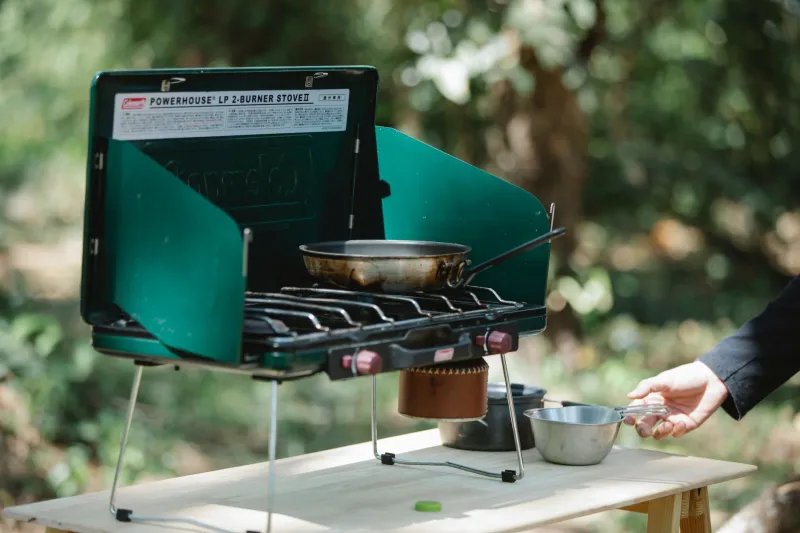
The Stove — $70 Skip the single-burner burner-pan setup. A two-burner propane stove (Coleman's classic Triton or Camp Chef's Everest if you stretch the budget) is the backbone of everything. The Everest runs around $120, the Coleman closer to $60 — both will boil water in a howling wind with a windscreen.
Cast Iron — $50 A 12-inch Lodge skillet, pre-seasoned, is the single most versatile object in camp. Fried eggs, seared trout, deep-dish cornbread, a base for a foil-covered dutch oven bake. It weighs a ton. That's the price of admission.
The Pot Setup — $45 A 4-liter pot with a lid covers coffee, pasta, and boiling water for dishes. Add a cheap folding camp sink and you've got a wash station.
Knives and Tools — $60 One good 6-inch chef's knife in a blade guard, a cutting board, tongs, a spatula that won't melt, a can opener, and a long-handled spoon. That's it. Resist the 47-piece gadget sets — half of it lives in the garage forever.
Food Storage That Outsmarts the Locals — $75 Bears get the headlines, but raccoons are the real career criminals of the campground. A hard-sided cooler plus a locking bear canister (or a bear bag hang kit for backcountry trips) covers both frontcountry and dispersed camping. In bear country, follow the local rules — many national forests require canisters outright.
Coffee System — $35 Aeropress or a stainless percolator. Choose your fighter, but do not skip this line item. Camp coffee failures have ended friendships.
Table and Light — $65 A roll-top aluminum table keeps food off the ground, and a rechargeable lantern with a red-light mode keeps your night vision while the skillet does its thing.
Miscellaneous Armor — $100 Biodegradable soap, a scrubber, spare propane canisters, foil, ziplocks, trash bags, a fireproof mat, and a small fire extinguisher. Boring? Absolutely. This is the category that separates the trail boss from the guy eating granola bars in the dark.
Total: roughly $500.
Building It Incrementally
Don't buy it all at once. Start with the stove, skillet, and one pot — about $165 — and run that setup for three trips. You'll learn what you actually reach for. Add storage and tools next, then comfort items last. A kitchen built over a season is a kitchen you'll keep for a decade.
A Three-Day Menu Worth Cooking
Day 1 (travel day): Foil-packet brats with peppers and onions on the grill grate, boxed mac and cheese upgraded with the leftover onions, s'mores — obviously.
Day 2 (the showpiece): Breakfast hash — diced potatoes, sausage, onions, eggs fried right on top in the cast iron. Dinner: cast iron fajitas. Pre-slice everything at home, pack in a ziplock, and sear in batches. Warm tortillas in foil on the stove lid.
Day 3 (break camp): Pancakes from a just-add-water mix, bacon in the skillet, and the last of the coffee while you pack. Clean-as-you-go discipline means teardown takes twenty minutes.
The Takeaway
A great camp kitchen isn't about spending money — it's about spending it once, in the right places, and then cooking in places with better views than any restaurant. Load the bin. Light the stove. Eat like you mean it.