Skip the Reservation Wars: 10 Wild Places Where Free Camping Is Still the Norm
Let's be honest: camping at the big-name national parks has become a blood sport. Campsites at Yosemite sell out in minutes. Zion's campgrounds are booked months out. And if you haven't set an alarm for the exact second reservations open on Recreation.gov, you're already behind.
Here's the good news — the United States has roughly 640 million acres of public land, and the overwhelming majority of it doesn't take reservations at all. Dispersed camping — pitching camp outside developed campgrounds — is legal and free across huge swaths of Bureau of Land Management (BLM) territory and national forests. You just have to know where to look.
What Counts as Dispersed Camping, Anyway?
Dispersed camping simply means camping outside a designated campground, usually along forest roads or in open country. On most BLM land and in national forests, it's legal for up to 14 days in a 30-day period. No fee. No host. No neighbors twenty feet away running a generator at 6 a.m.
The trade-off? You're on your own. No vault toilet, no fire ring, no potable water. That's the price of admission — and for a lot of us, it's exactly the point.
10 Places Where You Can Actually Get a Spot
1. Grand Mesa-Uncompahgre National Forest, Colorado. Hundreds of miles of forest roads above 9,000 feet, dotted with alpine lakes. Free sites abound off CO-65 and the Delta County side.
2. Moab's BLM Land, Utah. Yes, Arches is a zoo. But the BLM parcels surrounding Castle Valley and the La Sal Mountains offer red rock solitude for nothing. Camp at least 300 feet from water sources.
3. Ozark National Forest, Arkansas. Hardwood hollows, waterfall country, and endless forest service roads. Fall here rivals New England, without the crowds.
4. Owyhee Canyonlands, Oregon/Idaho. Often called the "Alaska of the Lower 48." Rimrock canyons, hot springs, and zero developed campgrounds for miles.
5. Pisgah's Quiet Corners, North Carolina. Skip the Blue Ridge Parkway pull-offs and head into Nantahala National Forest instead — free roadside sites near trout streams.
6. Lassen National Forest, California. In the shadow of its famous volcano neighbor, this forest stays blissfully empty. Dispersed spots near Lake Almanor are plentiful.
7. Kisatchie National Forest, Louisiana. Louisiana's only national forest: longleaf pine savannas and sandy ridge trails, mostly overlooked by Gulf Coast crowds.
8. High Uintas, Utah. Below the Mirror Lake Highway corridor, forest roads lead to free sites under 13,000-foot peaks.
9. Shawnee National Forest, Illinois. Garden of the Gods, sandstone bluffs, and free roadside camping between the Ohio and Mississippi rivers.
10. Black Rock Desert, Nevada. The playa and surrounding high desert are wide-open BLM country. Bring everything in, pack everything out.
Know Before You Go
- Check local rules. Some forests require permits for groups or restrict fires. Call the ranger district — rangers are the best free resource in the outdoors.
- Use existing sites. Camp in previously disturbed spots and stay 100+ feet from water.
- Download offline maps. Cell service is a rumor out here. OnX Backcountry or Gaia GPS are worth the subscription.
- Watch fire danger. Fire restrictions are common in the West. A portable stove is often the smarter bet.
Leave No Trace Isn't Optional
Dispersed camping only stays free if we protect it. Pack out all trash (including micro-trash and food scraps), don't create new fire rings, and bury human waste 6–8 inches deep and 200 feet from any water source. The rule of thumb: leave your site looking like you were never there.
Gear That Makes It Comfortable
You don't need much, but a few upgrades turn "surviving" into "savoring":
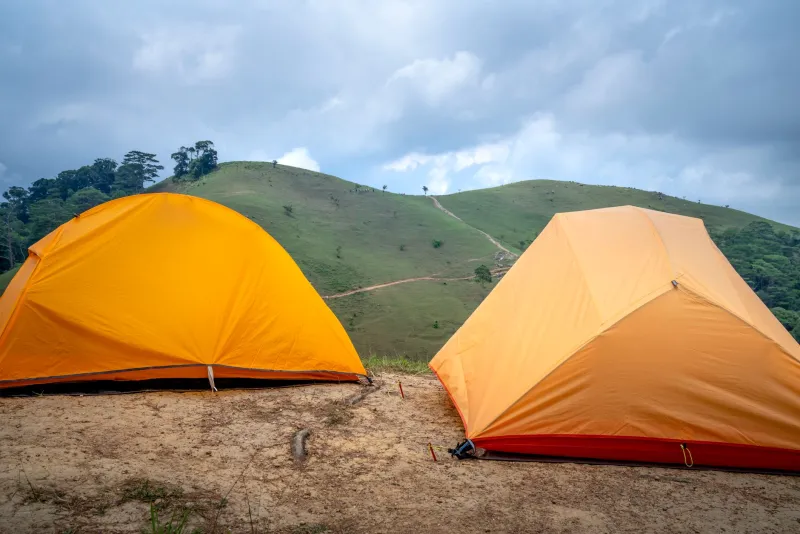
- A quality 3-season tent with solid stakes — you won't have a pad to anchor into
- Sleeping pad with real R-value — ground is colder and lumpier out here
- Water filtration plus a 5-gallon jug for base water
- A folding camp table and camp kitchen kit — no picnic tables in the wild
- Headlamp with spare batteries — darkness is dark away from cities
The reservation wars will rage on at the marquee parks. Meanwhile, millions of acres of wild America sit quietly, waiting, free of charge. Gear up, get out, and claim your patch of it.