Hashtag Ruined: The Case Against America's Most Photographed Campsites
There's a specific kind of heartbreak in pulling up to a campsite you've seen a hundred times on your phone and finding it nothing like the photo.
The fire ring is surrounded by a field of crushed beer cans and charred foil. There are six other rigs jockeying for the same 'secret' spot. Someone's portable speaker is doing its best. And the view — the actual view that made the place famous — is half-obscured by a Toyota Sienna with a rooftop tent parked exactly where the influencer stood.
We did this. Collectively. And it's time to talk about it.
The Geography of a Hashtag
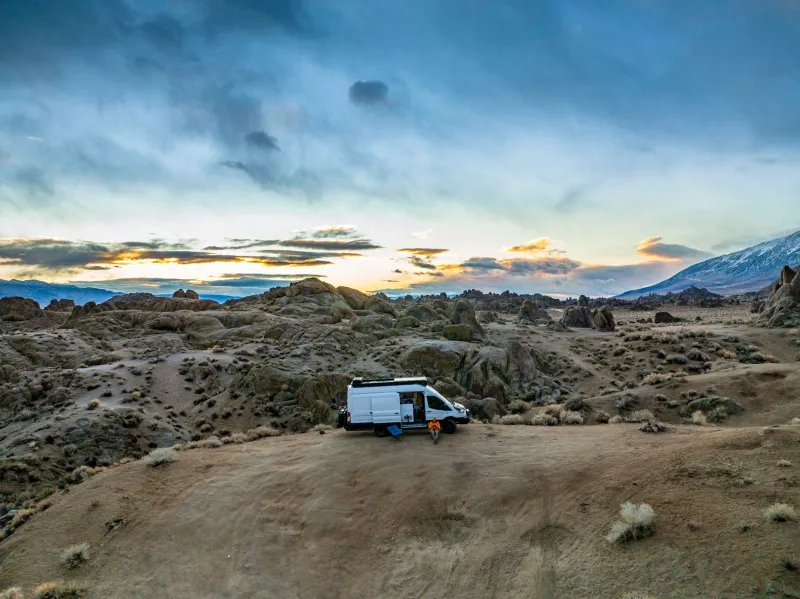
Consider the hits. Alabama Hills, that gorgeous sprawl of granite and arches below the Sierra — a place that hosted maybe a few hundred campers a weekend a decade ago now sees visitor numbers that have forced the BLM into drafting management plans just to keep the toilet situation from becoming a public health event.
Joshua Tree's fringe camping — the dispersed sites just outside the park boundary — became so infamous for trash, human waste, and fire scars that the county and land managers have spent years trying to rein it in. And the overflow camping around Horseshoe Bend in Page, Arizona, turned a quiet stretch of desert into a parking lot with a view.
The pattern repeats everywhere: a spot gets geotagged, the algorithm does its work, and within two seasons the place is loved to death. Fire rings multiply. Social trails spiderweb. Trash accumulates faster than volunteer groups can haul it. Then — inevitably — the agencies respond with closures, permits, and fees. The hashtag kills the very freedom that made the spot special.
The People Cleaning Up After Your Feed
Talk to land managers — the rangers and BLM field officers actually tasked with stewarding these places — and you hear the same exhausted refrain. They didn't get budget increases when visitation tripled. They got trash, and drones, and people digging trenches around tents in the desert, and fires lit in 15 mph wind because it looked good in the shot.
One dispersal area in the Southwest went from a handful of informal sites to dozens of illegal fire rings and social trails in under two years after a viral video. The response? Area closures. Campfire bans. Permit systems. Every restriction that campers complain about is almost always downstream of behavior that started with a camera.
The uncomfortable truth: geotagging a fragile spot is a small act of vandalism. The precise location of a pristine site is worth more unshared.
The Counter-Thesis: Good Camps Don't Have Coordinates
Here's the thing nobody wants to hear: the best campsite of your life probably doesn't appear in a search result. It's the flat patch of dirt you found after the famous spot was full. It's the forest road spur you scouted on a paper map. It's the site with no fire ring, no signal bars, and no reason for anyone to come looking.
The whole romance of camping — the actual point — is self-reliance. Finding your own spot is a skill, and like all skills in the outdoors, it's more rewarding than following directions to a pin.
And no, you don't need to be a hardcore overlander to do it. You need a map, a little research, and a willingness to drive an extra twenty minutes past the crowd.
Where to Point Your Rig Instead
Without giving away coordinates — that's the whole point — here's the type of places that still deliver the goods:
- National forest road spurs in the lesser-known ranges. Skip the famous forests. Every state has a second-tier range with the same views and a tenth of the traffic.
- State trust and wildlife management lands. Many states allow dispersed or low-cost camping on land most people drive past without a second glance.
- The quiet side of the famous destinations. Every overcrowded wonder has a neighboring drainage, ridge, or valley thirty minutes away with similar scenery and no hashtag.
- Your own region's BLM and national grassland holdings. Free, legal, and empty — especially midweek and off-season.
Use apps like onX or a good Motor Vehicle Use Map to find legal dispersed sites, then practice Leave No Trace hard: no new fire rings, pack out everything, camp at least 200 feet from water, and leave the site looking like you were never there.
Post the View, Not the Pin
Nobody's saying don't share. Take the photo. Post the sunrise. But leave the geotag off, or tag a whole region instead of a precise site. Gen Z hikers started the #leavenotrace tagging movement for exactly this reason — and honestly, they're right.
America's wild places don't need more famous campsites. They need more campers willing to earn theirs. The best spot is the one you found yourself, the one with no fire ring and no followers, the one you'll describe to friends as 'somewhere off that forest road' — and mean it.