Don't Be the Reason They Lock the Gate: Dispersed Camping Etiquette That Actually Matters
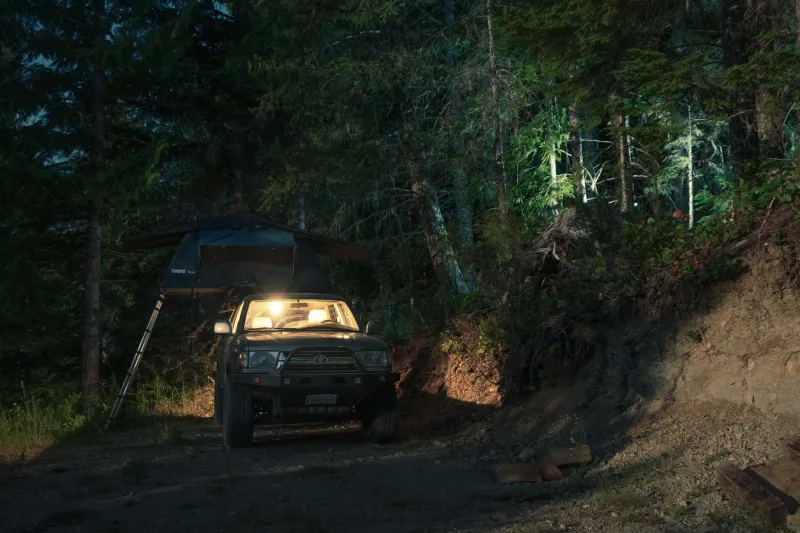
Let's get one thing straight: nobody owes us free camping.
That forest road you love, the one with the flat pullout and the creek view? It exists because a landowner, a county, or an agency decided to look the other way. And every summer, that goodwill gets tested by a fresh wave of campers who treat a fire ring as an invitation, a pullout as a bathroom, and a two-track as a personal parking lot.
The result is predictable. Counties post new signage. Agencies close roads. Local Facebook groups light up with photos of trash piles and hashtag campaigns to shut it all down. If dispersed camping gets legislated out of existence, it won't be because camping is inherently bad. It'll be because enough of us did it badly.
So here's the etiquette that actually matters — not the brochure version, the real one.
Read the Road Before You Read the Map
Dispersed camping is legal on most national forest and BLM land, but "most" is doing a lot of work in that sentence. Rules change at property lines, seasonal boundaries, and the odd county ordinance that nobody plastered on Instagram.
Before you set up:
- Check the motor vehicle use map (MVUM) for the forest you're entering. It shows exactly which roads allow dispersed camping and which don't. It's free, it's official, and it's the difference between a legal camp and a citation.
- Look for the signage trifecta: "No Camping," "Day Use Only," and "Closed to Overnight Parking." If a road has a fresh sign, assume there's a reason.
- Know your stay limits. Most federal land caps it at 14 days, some at 7. Stretching it is how you get rangers knocking — and rules tightening.
- Watch for fire restrictions. Stage 1 means no open flames outside a contained stove. Stage 2 usually means no fire at all. Ignoring this in a dry July isn't a vibe, it's a felony risk.
Ten minutes of research beats a $300 ticket and a closed road for everyone who follows you.
The Fire Ring Problem
Here's a hill I'll die on: that ring of rocks in a meadow is not an amenity. It's a scar.
Every new fire ring is a signal to the next camper that fires belong there — and to the one after that. Pretty soon a pristine meadow has five blackened circles, charred rocks, and a half-burned pallet somebody dragged in from the truck bed. This is precisely the imagery that ends up in the local newspaper article titled "Enough Is Enough."
The etiquette:
- Use existing rings only. If there's a fire ring, fine. If there isn't, don't create one.
- Burn it down to white ash and make sure it's cold to the touch before you leave. "It looked out" has burned down half the West at this point.
- Never burn trash. Foil, cans, and plastic don't disappear — they get dug out of fire pits by volunteers and rangers, and they photograph badly.
- Pack out what the last guy left. Yeah, it's not your garbage. Clean it anyway.
Trash Is the Whole Ballgame
Ask any ranger or county commissioner what turns public opinion against campers and the answer is never "tents." It's trash. Toilet paper flags waving in the sagebrush, human waste two feet from a creek, diaper piles in a fire ring.
The bar is embarrassingly low:
- Bring a trash bag — a real one, bigger than you think — and pack out everything, including orange peels and pistachio shells.
- If you're camping where there's no toilet, bring a shovel, go 200 feet from any water source, and bury it 6 to 8 inches deep. Pack out the paper. Yes, all of it.
- Gray water goes in the dirt far from the creek, not in the creek.
That's it. That's the whole ask.
Where It's Thriving — and Where It's Closing
Dispersed camping isn't dying everywhere. It's a patchwork, and knowing the landscape helps you plan.
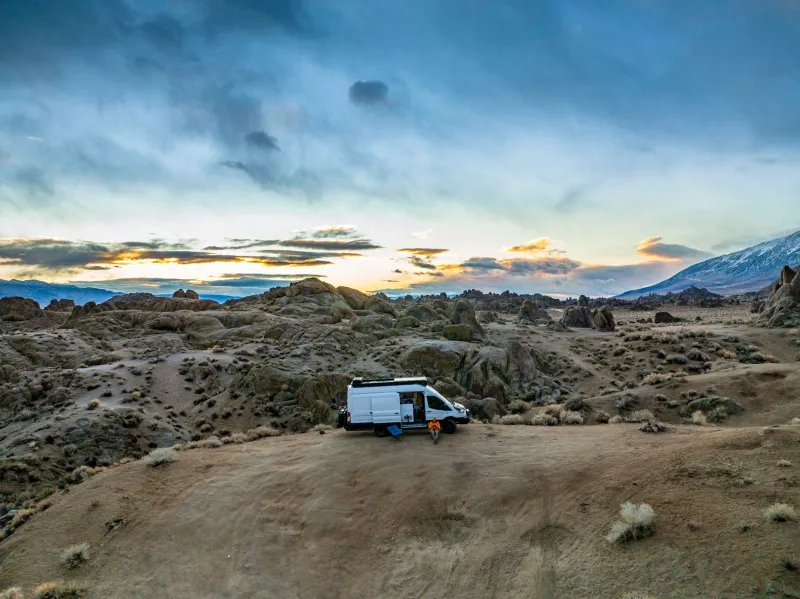
Still wide open: Nevada and much of the rural Mountain West remain some of the most generous dispersed camping ground in the country — vast BLM holdings, minimal signage, long stay limits. Same story across big chunks of New Mexico and the less famous national forests of the northern Rockies.
Thriving but managed: Colorado, Utah, and Arizona still offer enormous opportunity, but popular corridors near Moab, Boulder, and Phoenix have seen rolling closures, designated-site requirements, and aggressive signage. The rule of thumb: the closer to a famous destination, the tighter the rules.
Under pressure: Parts of California have pulled back hard — fire closures, day-use designations, and county ordinances near Lake Tahoe and the coast. Some national forests in the Pacific Northwest have converted open dispersed zones to reserved, designated sites after years of trash and fire problems.
The trend line is clear: the places that stay open are the places campers treat well.
The Long Game
There's a version of this where dispersed camping becomes a reservation-system memory — where every flat spot gets a QR code and a fee, and the freedom quietly dies in a committee meeting.
We get to choose whether that happens. Not with donations or petitions, but with cold fire pits and packed-out trash and leaving a site better than we found it. Dirt road diplomacy is simple: be the camper the county commissioner would want back.
The gate stays open for everybody, or it closes for everybody. Let's keep it open.